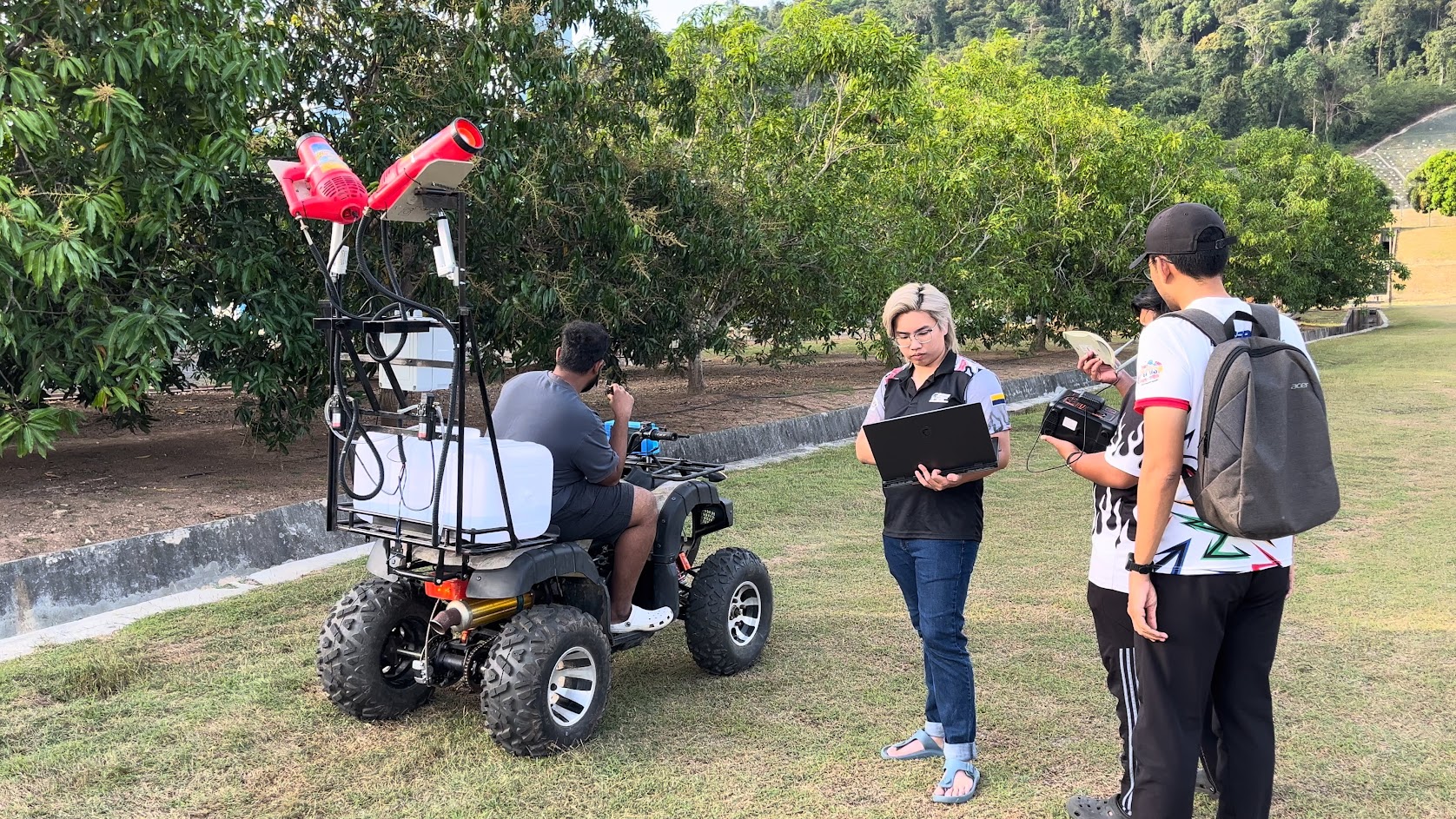
Automatic Pesticide Sprayer ATV
The ATV Management System is a comprehensive, full-stack web application built to simplify and organize complex ATV project operations. The goal was to move away from scattered, manual workflows by creating a centralized digital platform for managing all related data and monitoring project activities.
As the sole developer, I managed the entire development lifecycle, encompassing system planning, architecture design, database structuring, backend logic implementation, and frontend development. My responsibility included designing the communication protocols between all system components to ensure the platform could meet real-world operational demands.
The backend was engineered to handle all core business logic, data processing, and robust API services. Concurrently, the frontend was developed to provide an intuitive and highly usable interface, ensuring seamless interaction for all end-users. A key focus throughout the development process was maintaining scalability, modularity, and a clear separation of concerns across the frontend, backend, and database layers.
This project served as a deep dive into full-stack engineering, solidifying expertise in designing complex, database-driven applications and translating intricate, real-world operational requirements into a functional, scalable software solution.
Features
- Centralized dashboard for operational oversight
- Comprehensive ATV data management and tracking
- Role-based access control for secure workflows
- Structured module for record creation and updates
- Real-time data handling and information display
- Responsive design for optimal user experience
Challenges
Designing the overall system architecture from scratch to ensure seamless integration between the frontend, backend, and database. Furthermore, translating complex, real-world ATV operational workflows into practical, digital system features required deep domain understanding.
Solutions
We addressed architectural complexity by strictly separating the application into distinct frontend, backend, and database layers. Structured REST APIs were implemented for consistent data exchange, while careful database normalization ensured efficient data retrieval. The frontend was built iteratively, module by module, ensuring a clean, practical, and highly usable interface.